CRM Software with Free Trial: How to Choose the Best CRM for Your Business Before Investing
Managing customer relationships effectively is essential for businesses that want to improve sales, increase customer satisfaction, and achieve long-term growth. However, choosing the right customer relationship management (CRM) platform can be challenging, especially when businesses have different requirements, budgets, and workflows. This is why searching for CRM software with free trial options is a smart starting point.
A free trial allows businesses to explore CRM features, test usability, and understand how the software fits their daily operations before purchasing a subscription. Instead of relying entirely on product descriptions, companies can evaluate the platform through practical experience and make more confident decisions.
What Is CRM Software with a Free Trial?
CRM software with a free trial is a customer management solution that provides temporary access to its features without requiring an immediate paid subscription. Depending on the provider, the trial may last for a limited number of days or offer access to selected features.
During the trial period, businesses can explore customer databases, sales pipelines, contact management, automated follow-ups, reporting tools, and other available capabilities.
For example, a small sales team can test how easily it records new leads, assigns follow-up tasks, and tracks potential deals. This practical experience helps decision-makers determine whether the software supports their business goals and improves team productivity.
Benefits of Choosing CRM Software with a Free Trial
1. Test Features Before Making a Purchase
Every business has unique customer management requirements. Some companies need basic contact management, while others require advanced sales automation, marketing tools, and detailed analytics.
A free trial allows users to explore available features and determine which tools are genuinely useful. Businesses can also check whether important functions are included in their preferred subscription plan.
This reduces the risk of investing in software that does not meet operational needs.
2. Evaluate Ease of Use
Even a feature-rich CRM platform may not deliver value if employees find it difficult to use. Complicated interfaces and lengthy setup processes can slow adoption and reduce productivity.
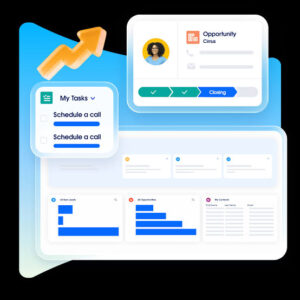
Testing CRM software before purchasing helps businesses understand its navigation, customization options, and everyday workflows. Team members can try common activities, such as adding contacts, updating deals, and scheduling reminders.
Choosing an intuitive platform can make implementation easier and encourage consistent usage across the organization.
3. Understand Automation Capabilities
Automation is one of the most useful features of modern CRM software. It can help businesses schedule follow-ups, assign leads, send selected email notifications, and reduce repetitive administrative work.
During a trial, businesses can test these workflows to understand how much manual effort the software may save. They can also evaluate whether automation rules are flexible enough to support their existing sales process.
Testing these capabilities provides a clearer picture of the platform’s practical value.
4. Check Integration and Compatibility
Businesses often use separate tools for email, accounting, marketing, customer support, and project management. A CRM system should work effectively with the applications that support daily operations.
A trial period can help users check available integrations, data import options, and synchronization capabilities. Businesses should also verify whether important integrations require additional subscriptions or higher-tier plans.
This helps prevent compatibility problems after implementation.
5. Compare Costs and Long-Term Value
A free trial provides an opportunity to evaluate whether the CRM’s benefits justify its subscription price. Businesses can compare pricing plans, user limits, storage allowances, automation restrictions, and premium features.
It is also important to check whether the trial automatically converts into a paid subscription and whether payment details are required during registration.
Evaluating the complete pricing structure helps businesses avoid unexpected expenses and select a solution that fits their budget.
Essential Features to Test During Your CRM Trial
When exploring CRM software with free trial access, focus on features that directly support your business activities.
- Contact management: Stores customer details and communication history.
- Lead management: Organizes inquiries and tracks potential customers.
- Sales pipeline: Monitors deals from initial contact to closure.
- Task automation: Schedules reminders and repetitive activities.
- Reporting and analytics: Tracks sales performance and customer engagement.
- Communication tools: Supports email tracking and customer follow-ups where available.
- Mobile accessibility: Allows employees to access customer information while working remotely.
- Security controls: Helps protect sensitive business and customer information.
Testing these capabilities with realistic business scenarios can help you make a more informed choice.
How to Choose the Right CRM After the Trial
Before starting a trial, identify your business goals and the problems you want the CRM to solve. Create a short list of essential features and invite relevant team members to test the platform.
Evaluate performance, ease of use, integration options, customer support, scalability, and overall pricing. Instead of focusing only on the number of features, consider whether the software improves your actual workflow.
Collect feedback from employees who use the system during the trial and compare the results against your original requirements.
Conclusion
CRM software with free trial access gives businesses a practical way to evaluate customer management tools before committing to a paid plan. It helps companies test essential features, understand usability, explore automation, and compare long-term costs.
By setting clear evaluation goals and testing realistic workflows, businesses can choose a CRM solution that supports their sales activities, strengthens customer relationships, and contributes to sustainable growth.